
-
Evie Huang sales consultant
-
Email: Sales@matictest.com
-
Phone/WhatsApp: +86 18996117830
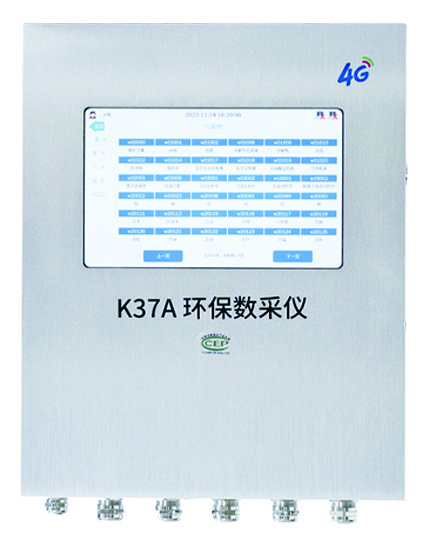
Smart City Water Management: Connecting River, Pipe and Building Sensors into One Platform
How city water teams connect river stations, distribution network sensors and building-level water meters into a single platform — architecture, data model and procurement checklist.
Smart city water management is rarely a single sensor project. By the time a city has built a river-monitoring programme, a pipe-network pressure and quality programme and a building-level metering programme, the data lives in three separate platforms with three separate logins. The biggest jump in operational value comes from connecting these layers into a single decision platform — not from adding more sensors. This article walks through a practical architecture and a phased rollout plan that we have used with several city-scale deployments.
1. The four layers of a city-scale programme
Even the smallest functional city water platform has four layers. They do not all have to be built at once, but they all have to exist eventually.
- Field layer — sensors, loggers, telemetry terminals. Owns the physical measurement.
- Connectivity layer — 4G/LoRa/Ethernet, MQTT brokers, edge gateways. Owns reliable delivery.
- Platform layer — time-series database, asset registry, alarm engine, GIS views. Owns decision-making.
- Service layer — public dashboards, compliance reports, mobile alerts, billing integrations. Owns human action.
2. The data model: how to describe a river, a pipe and a building in one schema
Most city platforms fail because they treat a river, a pipe and a meter as different data structures and never reconcile them. The fix is to express everything in one model: an asset has a geometry, a parameter list and a measurement stream; whether that asset is a river station, a pipe segment or a building meter is just metadata on top.
| Asset class | Geometry | Typical parameters | Telemetry cadence |
|---|---|---|---|
| River monitoring station | Latitude/longitude, water body id | pH, DO, conductivity, turbidity, ammonia nitrogen, COD, TN, TP, level | 5 to 15 minutes |
| Distribution pressure & quality | Pipe segment + depth at point | Pressure, residual chlorine, turbidity, conductivity | 1 to 5 minutes |
| Building meter | Building id + meter id | Flow, instantaneous and cumulative | 15 to 60 minutes |
| CSO outfall | Outfall + chamber geometry | Level, velocity, rainfall correlation | 1 to 5 minutes; rain-driven burst uploads |
Pitfall: do not start the platform layer with custom APIs per vendor. Standardise on MQTT or HTTP REST with a thin gateway layer, even if the field devices are heterogeneous.
3. Phased rollout
- Phase 1 (3 months): consolidate existing data sources into a single time-series store; build the asset registry; produce a public dashboard from existing data.
- Phase 2 (6 months): add river stations on the platform; integrate the SCADA of the wastewater plant; alarm engine live.
- Phase 3 (12 months): bring distribution mains and buildings online; tight coupling with billing and operations dashboards.
- Phase 4 (24 months): enable data sharing with provincial / national water platforms using standardised APIs.
4. Interoperability and procurement checklist
- Every new sensor ships with MQTT or REST as a first-class protocol — no proprietary client only.
- Each field device has a typed data dictionary documented in a single machine-readable file (YAML or JSON Schema).
- Vendor lock-in: prefer open protocols and avoid per-sensor licence fees that scale with the deployment.
- Edge gateways run a documented OS (Linux or a vendor-supported RTOS) with an upgrade path.
- Time synchronisation: every device has its clock synced to NTP or GPS to keep time-series aligned.
- Security: TLS 1.2+ on all device-to-platform links; per-device certificates; rotate annually.
5. The 80/20 of decision automation
Not every decision should be automated. The automation pyramid that earns the fastest payback is data-and-alarm at the bottom, threshold-tied control in the middle, and full closed-loop control at the top — and only ever after at least 12 months of operator trust in the data.
Frequently asked questions
- Should we buy the platform from one vendor or integrate ourselves?
It depends on the in-house capability. City teams with cloud and integration engineers usually integrate; teams without typically buy. Either way, insist on open protocols so the platform can be replaced without replacing the field. - What is the realistic cost per data point per year?
At a small-to-medium scale, a fully loaded total cost of ownership of roughly 100 to 400 USD per sensor per year is a reasonable planning figure for hardware, connectivity, platform and service, declining as scale grows. - How do we deal with legacy SCADA data?
Most legacy SCADA systems support OPC-UA or Modbus export. A small gateway service that pushes one-second SCADA values into the platform time-series store is usually enough to bring legacy data forward.
Closing
A unified water platform is an architectural investment, not a sensor procurement. If you are scoping a smart city water programme and want to stress-test your architecture against what we have seen in deployments from north to south China and beyond, our engineering team can run a one-day architectural review with your team and return a reference design and a phased rollout plan.
About Matictest Environmental
Chongqing Matictest Environmental Technology Co., Ltd. is a national high-tech enterprise integrating scientific research, instrument manufacturing and IoT platform development. We design and manufacture water quality sensors, online multi-parameter analyzers, automatic water samplers, flow & level meters and a complete IoT monitoring platform for aquaculture, river and lake monitoring, municipal and industrial wastewater, and smart-city applications. Visit our product catalogue or contact our engineering team for site-specific sizing, calibration and integration support.
About Author

Hello, I'm Leno Zhang. I have 15 years of experience in the water quality monitoring industry, with extensive pre-sales and after-sales project experience. Our company specializes in integrated water quality monitoring stations, multi-parameter analyzers and smart sensors. I can assist customers in solving all practical on-site project challenges and provide the most suitable integrated solutions.
Tell Us Your Requirement
High Quality
Stable performance, IP-rated field design, accurate measurement and reliable data for 24/7 water quality monitoring in harsh environments.
Fast Delivery
Timely delivery to support your urgent orders and project schedules efficiently and professionally at any time.
Best Warranty
Professional Warranty: 12-month coverage plus long-term remote support for stable water quality monitoring and customer satisfaction.