
-
Evie Huang sales consultant
-
Email: Sales@matictest.com
-
Phone/WhatsApp: +86 18996117830
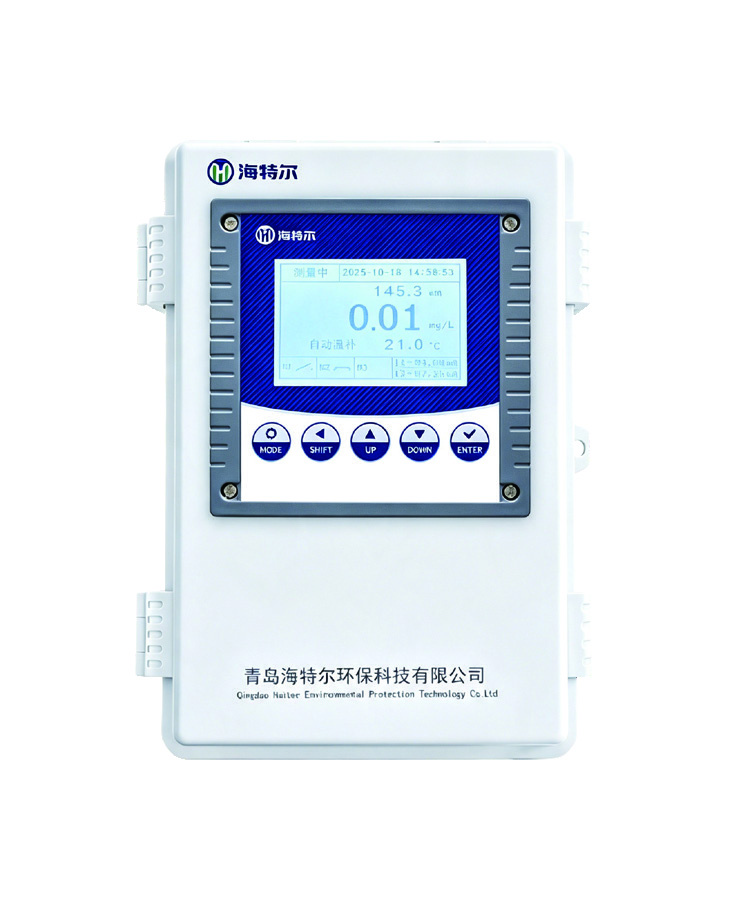
Why Aquaculture Monitoring Needs Both Inline Sensors and Lab Validation: A Practical Workflow
Inline water quality sensors catch the emergency that lab sampling misses. This article describes why both belong in a modern aquaculture operation and how to design a workflow that uses each one where it shines.
Two claims are common in the aquaculture world, and they are both half-true: inline sensors save the fish, and lab sampling is the only valid measurement. The honest answer is that inline sensors and lab sampling do different jobs, and a modern farm runs both — inline sensors to react to events in real time, lab sampling to verify trends and to cover parameters that are still hard to put on a probe. This article describes how to design a workflow that uses each one where it shines.
1. Why inline and lab are not substitutes
Inline sensors react in seconds. They are the right tool for an aerator on/off decision, an emergency alert, and a day-by-day trend. Lab sampling takes hours to days of turnaround. It is the right tool for regulatory reporting, seasonal lab correlation and the wider parameters — ammonia nitrogen, nitrite, alkalinity — that do not yet have a reliable online sensor at every price point.
2. The parameters, by who measures them
| Parameter | Inline recommended | Lab recommended | Workflow |
|---|---|---|---|
| Dissolved oxygen | Always | Weekly cross-check | Inline drives aerator; lab confirms calibration |
| pH | Always | Weekly cross-check | Inline alerts; lab verifies trends |
| Temperature | Always | Not needed | Inline only |
| Ammonia nitrogen (TAN) | Where liability / value is high | Weekly | Inline every 30 minutes; lab weekly |
| Nitrite | Where probe is reliable | Weekly | Lab covers species-specific toxicity |
| Alkalinity | Not usually | Weekly | Lab only |
| Phosphorus | Not usually | Bi-weekly | Lab only |
3. The daily farm workflow
- 06:00 — systems check the inline sensor health; if any probe is drifting, schedule a service ticket before the first feed.
- 08:00 — feeding starts; the platform logs feed volume against oxygen trend for correlation.
- Throughout the day — the platform alerts on DO drop, pH excursion or temperature change; operator responds.
- 16:00 — log review; any inline readings that look wrong trigger a same-day lab cross-check.
- Weekly — composite sampling across the farm sent to the lab; trend compared against inline.
4. Inline sensor selection
For aquaculture, the standard kit is: dissolved oxygen (membrane or optical — optical is more reliable at low concentrations but more expensive), pH, temperature, and optionally conductivity. Optical DO is preferred at the fingerling stage where low-DO events are most damaging and probes are often left in a submerged housing for long periods.
5. Where lab earns its keep
- Regulatory reporting — TA-N, NO2-N, BOD and similar where the regulator requires a certified method.
- Species-specific toxicity — Nitrite at the concentrations that matter for shrimp and certain fish species still relies on a wet-chemistry method.
- Trend verification — a four-week composite that the farm team uses to confirm the inline trend is honest.
- Calibration anchor — a fresh lab value is the best two-point calibration reference for an inline probe.
Pitfall: do not let one set of sensors become the only source of truth for the regulator. Keep a documented lab schedule so that regulatory audits find at least quarterly validation evidence.
6. Building the cross-check into the platform
- Set up a weekly lab upload template: sample id, parameter, lab value, timestamp.
- Run a rolling 12-week inline-vs-lab comparison; alert if the residual exceeds 15 percent.
- Store calibration history for each probe with the sensor metadata.
- Make the inline plot and the lab plot visible side by side on the farm operations screen.
Frequently asked questions
- How often should I replace the membrane on my DO probe?
On a fish farm with auto-clean, every 6 to 12 months. In heavy biofouling conditions, every 3 to 6 months. Have spares ready and log the replacement so you can correlate the change. - Can I trust inline ammonia readings for control?
Modern ion-selective ammonia probes are good at low to mid concentrations but drift faster than pH probes. Use inline for trends and load events; certify with lab at least every two weeks. - What is the minimum sensor kit for a small farm?
Inline DO and pH plus a weekly lab sample for ammonia, nitrite and alkalinity. Anything beyond this is optional until the farm is large enough to recover the spend.
Closing
Inline + lab is not a compromise — it is the standard. If you would like a reference workflow and a sensor package tailored to your species and farm size, our engineering team can scope a turnkey kit and a platform integration plan within two business days.
About Matictest Environmental
Chongqing Matictest Environmental Technology Co., Ltd. is a national high-tech enterprise integrating scientific research, instrument manufacturing and IoT platform development. We design and manufacture water quality sensors, online multi-parameter analyzers, automatic water samplers, flow & level meters and a complete IoT monitoring platform for aquaculture, river and lake monitoring, municipal and industrial wastewater, and smart-city applications. Visit our product catalogue or contact our engineering team for site-specific sizing, calibration and integration support.
About Author

Hello, I'm Leno Zhang. I have 15 years of experience in the water quality monitoring industry, with extensive pre-sales and after-sales project experience. Our company specializes in integrated water quality monitoring stations, multi-parameter analyzers and smart sensors. I can assist customers in solving all practical on-site project challenges and provide the most suitable integrated solutions.
Tell Us Your Requirement
High Quality
Stable performance, IP-rated field design, accurate measurement and reliable data for 24/7 water quality monitoring in harsh environments.
Fast Delivery
Timely delivery to support your urgent orders and project schedules efficiently and professionally at any time.
Best Warranty
Professional Warranty: 12-month coverage plus long-term remote support for stable water quality monitoring and customer satisfaction.