
-
Evie Huang sales consultant
-
Email: Sales@matictest.com
-
Phone/WhatsApp: +86 18996117830

How to Choose the Right Water Quality Monitoring Station for Your Site: A Field Selection Guide
A practical decision framework for selecting between micro, wall-mounted and cabinet water quality monitoring stations, based on power, connectivity, parameters and maintenance access.
Specifying a water quality monitoring station looks straightforward on paper — pick a sensor set, decide on a telemetry link and bolt the box to a pole or a wall. In the field, the failure modes are almost always mismatches between the enclosure, the power budget, the connectivity and the operator’s maintenance access. This guide walks through the four questions a planner should answer before buying, and ends with a 12-point field checklist that pre-empts the most common commissioning issues.
1. The four decisions that drive station selection
Most monitoring-station tenders get the easy questions right (which parameters, which range, which sample rate) and the hard questions wrong (where does the station live, how does it stay clean, who services it). A site-survey visit typically surfaces the real constraints: a river section with no shelter, no grid power and 4G that drops in rain; a fish-pond bank where handheld visits happen twice a week; a wastewater influent channel with constant splashing. Get those constraints wrong and no amount of sensor accuracy will save the deployment.
2. Form-factor comparison: micro vs wall-mounted vs cabinet
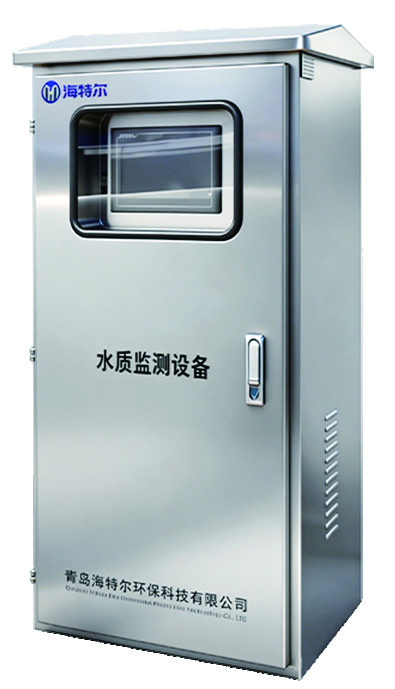
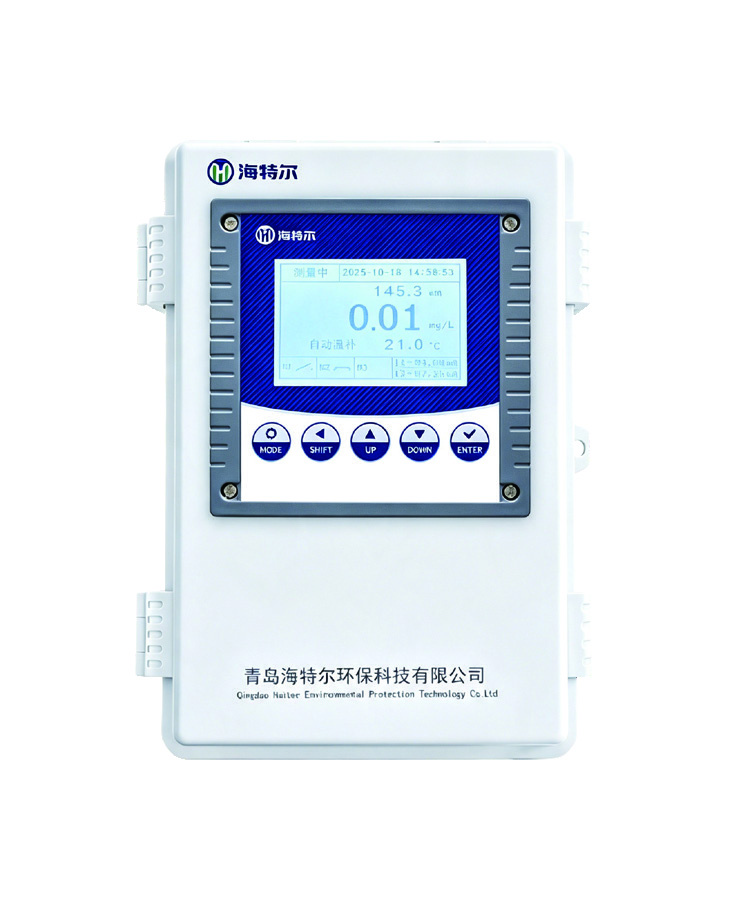
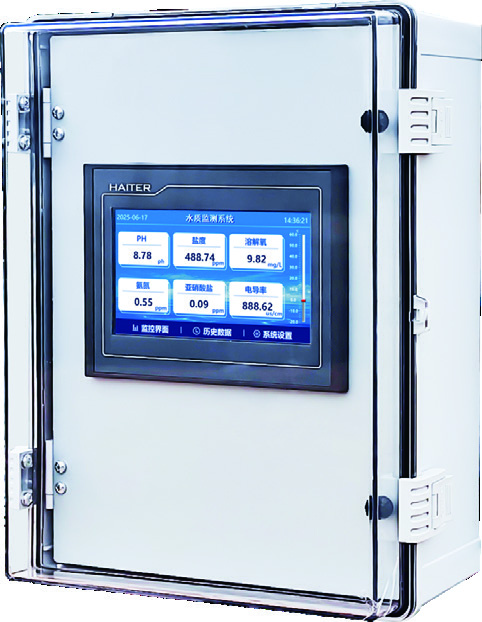
| Criterion | Micro station (e.g. MT-IWS-G) | Wall-mounted (MT-1105A) | Cabinet (MT-1105C) |
|---|---|---|---|
| Typical site | River / lake buoy, open channel | Drinking water pump room, secondary water supply tank room | Wastewater treatment plant, industrial process stream |
| Enclosure rating | IP68 submersible, pole or buoy mount | IP65 wall mount | IP54 floor-standing cabinet, 304 stainless |
| Power | Solar + 12 V battery, ultra-low-power mode | Mains 220 VAC with battery backup | Mains 220 VAC; UPS option |
| Parameters (standard) | pH, DO, conductivity, turbidity, temperature | pH, DO, conductivity, turbidity, temperature, residual chlorine | pH, ORP, COD, ammonia nitrogen, TP, TN, conductivity, turbidity |
| Connectivity | 4G/LoRa, ultra-low-power telemetry (MT-GL001) | Ethernet / 4G / RS-485 | 4G / Ethernet, full SCADA integration |
| Maintenance access | Boat or wading visit, weekly recommended | Operator on-site daily to weekly | On-site operator, daily checks |
| Typical unit cost (USD) | Low (single enclosure, battery) | Mid (wall mount, mains) | High (cabinet + multi-parameter + reagents) |
3. The parameter decision: what you must measure vs what you would like to
Every additional sensor adds cost, cleaning time and a new failure mode. Before you add, write down what decision is being driven by that sensor:
- Regulatory compliance — list the parameters your class of water requires (e.g. CHN GB 3838-2002 for surface water Class III: pH, DO, COD, ammonia nitrogen, TP, TN, BOD, fluoride etc.).
- Operational decision — e.g. on a fish farm, dissolved oxygen drives aerator on/off; on a wastewater plant, ammonia nitrogen drives aeration basin DO setpoint.
- Diagnostic — useful for trend analysis but not for real-time control (e.g. nitrate, total organic carbon). Often sampled weekly by hand and checked against the online trend.
Rule of thumb: if a parameter does not drive an action within 24 hours, you can usually replace online measurement with intermittent sampling and save the maintenance budget.
4. Connectivity, power and service: the three constraints that override everything
Even a brilliant sensor package fails when the box runs out of power or the data stops reaching the platform. Walk the site with these constraints in mind:
- Connectivity: 4G signal strength at pole height; LoRa gateway range if the site is in a deep valley; ethernet availability for fixed plant rooms.
- Power: solar yield in winter at that latitude (lower at high latitude by 30–60 % vs summer); battery sizing for the longest expected cloudy period plus 2 weeks margin; mains availability and quality (stable or frequent brownouts?).
- Service: how does a technician reach the site in flood / ice / heavy rain; what tooling and consumables do they need to bring; can they swap probes, or only the full sensor head?
5. A 12-point field checklist before you place the order
- Confirm which parameters are mandatory vs nice-to-have.
- Verify grid power availability (voltage, stability, earthing) at the install point.
- Verify 4G/Ethernet/LoRa connectivity at pole height, not at ground level.
- Confirm mounting surface — pole, wall, floor, buoy — and the load-bearing envelope.
- Document ambient range (min/max air temperature, humidity, splash, submersion risk).
- Check maintenance access — boat, ladder, trench, road gate, accessibility window.
- Plan reagent and consumable replenishment for wet-chemistry analyzers.
- Define who receives which alarm (SMS / email / platform role) and the SLA.
- Decide data retention and archival period — drives telemetry payload sizing.
- Confirm calibration standards and whether field calibration is acceptable vs lab-validated re-calibration.
- Plan probe storage and travel kit for probes that need cleaning between visits.
- Confirm the data platform ingestion format (CSV / MQTT / custom API).
6. Field example: sizing a river-section station
A river class-III monitoring point requires pH, DO, conductivity, turbidity and temperature. The site has no mains power, weak 4G and is only reachable by boat. We specify a micro station (MT-IWS-G) with five probes, 60 Wp solar panel, 20 Ah LiFePO4 battery sized for 14 days of autonomy, and an MT-GL001 ultra-low-power 4G telemetry terminal. The pole is stainless steel, anchored into the river bank with a base socket that can be lifted in flood season. The operator visits weekly, swaps probes once a month and runs an in-field two-point calibration for pH and DO every 8 weeks.
Frequently asked questions
- Can I use a micro station inside a wastewater treatment plant?
Technically yes, but you will overpay for the IP68 enclosure and underuse the ultra-low-power electronics. A wall-mounted or cabinet analyzer is a better fit where mains power and frequent operator access are available. - How often do probes need calibrating in the field?
Two-point calibration every 6 to 8 weeks for pH, DO and ion-selective probes under continuous service. Conductivity and turbidity probes drift much slower and often hold calibration for 3 to 6 months. Always keep calibration records. - What is the realistic data uptime I can expect from a micro station?
On a well-designed solar-and-4G micro station, 95 to 99 percent data uptime is realistic. The remaining gap usually comes from grid events, sensor cleaning cycles and connectivity black-outs during storms or flood events.
Closing
Choosing the right architecture for water quality monitoring always comes down to three questions: what parameters the site legally or operationally requires, how the data has to reach decision-makers, and how much maintenance the location can support. Once those are pinned down, the hardware, the platform and the service plan tend to choose themselves. If you are scoping a tender or a retrofit, our engineering team can run a free remote review of your monitoring requirements and return a recommended station, sensor and telemetry configuration within two business days.
About Matictest Environmental
Chongqing Matictest Environmental Technology Co., Ltd. is a national high-tech enterprise integrating scientific research, instrument manufacturing and IoT platform development. We design and manufacture water quality sensors, online multi-parameter analyzers, automatic water samplers, flow & level meters and a complete IoT monitoring platform for aquaculture, river and lake monitoring, municipal and industrial wastewater, and smart-city applications. Visit our product catalogue or contact our engineering team for site-specific sizing, calibration and integration support.
About Author

Hello, I'm Leno Zhang. I have 15 years of experience in the water quality monitoring industry, with extensive pre-sales and after-sales project experience. Our company specializes in integrated water quality monitoring stations, multi-parameter analyzers and smart sensors. I can assist customers in solving all practical on-site project challenges and provide the most suitable integrated solutions.
Tell Us Your Requirement
High Quality
Stable performance, IP-rated field design, accurate measurement and reliable data for 24/7 water quality monitoring in harsh environments.
Fast Delivery
Timely delivery to support your urgent orders and project schedules efficiently and professionally at any time.
Best Warranty
Professional Warranty: 12-month coverage plus long-term remote support for stable water quality monitoring and customer satisfaction.