
-
Evie Huang sales consultant
-
Email: Sales@matictest.com
-
Phone/WhatsApp: +86 18996117830


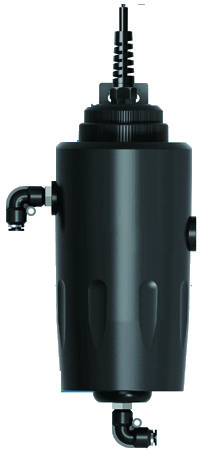
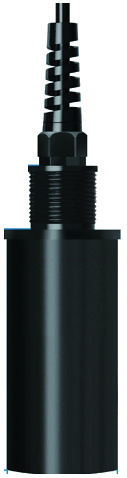


Smart Turbidity Sensor MT-380 Series | 90° Scattering Infrared
Digital turbidity sensors using 90° infrared scattering, available in 0-4000 NTU and 0-400 NTU ranges. ±5.0% FS accuracy, IP68, ≤10W power, RS485 Modbus RTU and 4-20mA output.
Send your requirements, we will quote for you within 12 hours
Description
Product Overview
The MT-380 series smart turbidity sensor measures the cloudiness or suspended solids content of a liquid. Turbidity is the concentration of suspended particles in a liquid, normally assessed by measuring the scattering or absorption of light.
These sensors use a 90° infrared scattering principle, in which a light beam is projected into the sample and the light scattered at 90° by suspended particles is measured. The infrared source minimises interference from sample colour, and the digital design delivers a stable reading with automatic signal processing.
Key Features
- 90° infrared scattering: Standard-compliant optical geometry with reduced colour interference.
- Two range options: 0–4000 NTU and 0–400 NTU models to match clean and heavily loaded water.
- High resolution: 0.01% resolution with ±5.0% FS accuracy.
- Wide temperature range: 0–60 °C.
- Low power: ≤ 10 W.
- IP68 housing: Suitable for continuous immersion.
- Material options: 316 stainless steel or POM housing depending on the model.
- Dual output: 4–20 mA (adjustable) plus RS485 Modbus RTU.
Measurement Principle
Turbidity sensors may use several techniques, including laser scattering, infrared absorption and visible light scattering. The MT-380 series applies 90° infrared scattering: light is directed into the sample and a detector positioned at 90° to the beam measures the intensity of scattered light, which is proportional to the concentration of suspended particles.
Model Comparison
| Model | MT-380ZT | MT-380ZL |
|---|---|---|
| Measurement principle | 90° scattering (infrared) | 90° scattering (infrared) |
| Measurement range | 0–4000 NTU | 0–400 NTU |
| Resolution | 0.01% | 0.01% |
| Accuracy | ±5.0% FS | ±5.0% FS |
| Temperature range | 0–60 °C | 0–60 °C |
| Housing material | 316 stainless steel | POM |
| Power | ≤ 10 W | ≤ 10 W |
| Current output | 4–20 mA (adjustable) | 4–20 mA (adjustable) |
| Data communication | RS485 (Modbus RTU) | RS485 (Modbus RTU) |
| Protection rating | IP68 | IP68 |
Technical Specifications
| Item | Specification |
|---|---|
| Measurement principle | 90° scattering (infrared) |
| Measurement range | 0–400 NTU / 0–4000 NTU (model dependent) |
| Resolution | 0.01% |
| Measurement accuracy | ±5.0% FS |
| Temperature range | 0–60 °C |
| Housing material | 316 stainless steel / POM |
| Power | ≤ 10 W |
| Current signal output | 4–20 mA (adjustable) |
| Data communication | RS485 (Modbus RTU) |
| Protection rating | IP68 |
Applications
- Wastewater treatment
- Secondary water supply
- Swimming pool water
- Industrial circulating cooling water
- Drinking water
- Environmental monitoring
Frequently Asked Questions
Which range should I choose: 0–400 NTU or 0–4000 NTU?
Choose the 0–400 NTU model for drinking water, secondary supply and pool water where turbidity is low and high resolution near zero matters. Choose the 0–4000 NTU model for wastewater, industrial effluent and stormwater where turbidity can be very high.
Why 90° scattering with infrared light?
90° scattered-light detection is the standard geometry for turbidity measurement, and using infrared reduces interference from the colour of the sample, giving more reliable readings across different water types.
How does turbidity monitoring help operations?
By continuously monitoring turbidity, water quality problems such as filter breakthrough or contamination ingress can be detected early, so corrective action can be taken before water safety is affected.
Is the sensor suitable for continuous immersion?
Yes. The IP68-rated housing supports permanent submersion in the monitored water.
Related products


High Quality
Stable performance, IP-rated field design, accurate measurement and reliable data for 24/7 water quality monitoring in harsh environments.
Fast Delivery
Timely delivery to support your urgent orders and project schedules efficiently and professionally at any time.
Best Warranty
Professional Warranty: 12-month coverage plus long-term remote support for stable water quality monitoring and customer satisfaction.
Reviews
There are no reviews yet.