
-
Evie Huang sales consultant
-
Email: Sales@matictest.com
-
Phone/WhatsApp: +86 18996117830
Doppler vs Area-Velocity Flow Meters: When Each Technology Wins
A side-by-side comparison of Doppler and area-velocity (AV) flow measurement for partially filled pipes and open channels, covering accuracy under site conditions and the right use cases for each.
Flow measurement is one of the few places in water quality monitoring where a wrong technology choice is not recoverable with a better probe — once the sensor is in the pipe, the failure mode shows up at every regulator audit. The two technologies that dominate partially filled pipe and open-channel measurement are Doppler and area-velocity. They sound similar but they fail and succeed in different places. This article lines them up against eight real-world site conditions and points to the right choice for each.
1. The two physics, in one paragraph each
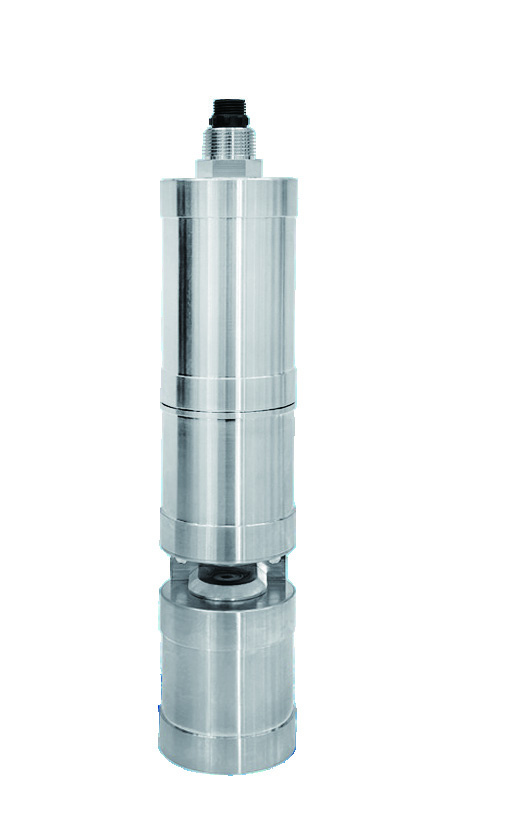
Doppler flowmeters (like the Matictest MT-D800B) inject an acoustic beam into the flow and measure the frequency shift of the backscatter from particles and bubbles. The shift is proportional to the flow velocity. Doppler is non-contacting — the sensor sits in the flow but nothing protrudes into the stream, and the technology needs particulates in the water to scatter the beam.
Area-velocity (AV) flowmeters combine a pressure or ultrasonic level sensor with a velocity sensor that is usually also a Doppler or a cross-correlation probe. AV meters measure the cross-sectional area of the flow from the level and the average velocity, then multiply. AV works best in channels with predictable geometry (flumes, weirs, partially filled pipes).
2. When each one fails
Doppler is silent on clear water with no particulates — the acoustic beam passes through and the meter never sees a return. That includes clear-water drinking water supplies and some industrial clean-water streams. AV meters do not have that problem because they measure level separately.
AV meters fail when the channel geometry is not what the installer set up: sand accumulates, a downstream blockage raises the level, the channel has been resurfaced and the cross-section no longer matches the meter. They are unforgiving if no level measurement is possible, which rules out surcharged pipes that stay full at all flows.
3. Decision table
| Site condition | Recommended technology | Why |
|---|---|---|
| Partially filled sewer, frequent sediment and debris | Doppler | AV level sensor is buried; Doppler rides through sand and fouling |
| Open channel with weirs or flumes, clear water | Area-velocity | No scatterers for Doppler; calibrated flume geometry fits AV |
| Surcharged pipe that stays full | AV with submerged sensor + pressure | Doppler needs at least some free surface to return signal |
| Combined sewer overflow (CSO) chamber | Doppler for high flows, AV with ultrasonic level low flows | Doppler holds up under submerged conditions |
| Industrial effluent with high temperature or chemicals | Doppler | Non-contacting probe tolerates hostile flow without metallic corrosion |
| Drinking-water clearwell or filter effluent | Magnetic or static AV; avoid Doppler | Doppler sees no scatter in clean water; switch to magnetic flowmeter where possible |
| River level and velocity monitoring | Doppler + radar level | River beds are irregular; AV cross-section model degrades; Doppler is independent of geometry |
| Stormwater outfall, intermittent flow | Doppler | Works at zero flow, no moving parts to seize up |
4. Common misconceptions
- “Doppler needs a particle every couple of seconds” — false: modern Doppler meters correlate over many pings and can track velocity even when individual pings fail.
- “AV meters do not need calibration” — false: every AV installation needs an on-site level-vs-flow check against a tracer or a rated flow.
- “Doppler does not work in dirty water” — actually the opposite. Doppler thrives in dirty, particle-laden streams, which is exactly where traditional mechanical flowmeters seize up.
5. Spec checklist before purchase
- Minimum and maximum expected depth at the install point.
- Particle load — is the water clear, sediment-rich or oily?
- Channel geometry and whether it is stable.
- Power and telemetry availability.
- Required accuracy and the use case (billing, compliance, process control).
- Maintenance access and frequency.
Frequently asked questions
- Can a single meter do Doppler and AV?
Yes, hybrid units combine a velocity sensor (Doppler) with a level sensor (ultrasonic or radar) and use the more reliable of the two at any given flow. These work well in CSO and partially filled sewer applications. - How accurate are Doppler meters?
Modern Doppler meters reach plus or minus 2 to 5 percent of reading in good conditions (particles and a stable velocity profile). In poor conditions, accuracy degrades and you should budget for a wider uncertainty band. - What is the typical lifespan of a Doppler sensor in wastewater?
Five to ten years for the electronics, less for the wetted face in fouling-prone sites. Plan for an annual cleaning and a five-year electronics refresh.
Closing
If you are sizing a flow measurement program and need help picking between technologies, our engineering team can review your site data and return a recommendation in two business days. Many flow measurement programs have failed not because of the meter but because the technology was a poor match for the channel — a 20-minute review is usually enough to tell.
About Matictest Environmental
Chongqing Matictest Environmental Technology Co., Ltd. is a national high-tech enterprise integrating scientific research, instrument manufacturing and IoT platform development. We design and manufacture water quality sensors, online multi-parameter analyzers, automatic water samplers, flow & level meters and a complete IoT monitoring platform for aquaculture, river and lake monitoring, municipal and industrial wastewater, and smart-city applications. Visit our product catalogue or contact our engineering team for site-specific sizing, calibration and integration support.

About Author

Hello, I'm Leno Zhang. I have 15 years of experience in the water quality monitoring industry, with extensive pre-sales and after-sales project experience. Our company specializes in integrated water quality monitoring stations, multi-parameter analyzers and smart sensors. I can assist customers in solving all practical on-site project challenges and provide the most suitable integrated solutions.
Tell Us Your Requirement
High Quality
Stable performance, IP-rated field design, accurate measurement and reliable data for 24/7 water quality monitoring in harsh environments.
Fast Delivery
Timely delivery to support your urgent orders and project schedules efficiently and professionally at any time.
Best Warranty
Professional Warranty: 12-month coverage plus long-term remote support for stable water quality monitoring and customer satisfaction.